ServicesGutters
Gutters in Guthrie, Built to Look After Your Roof Edge
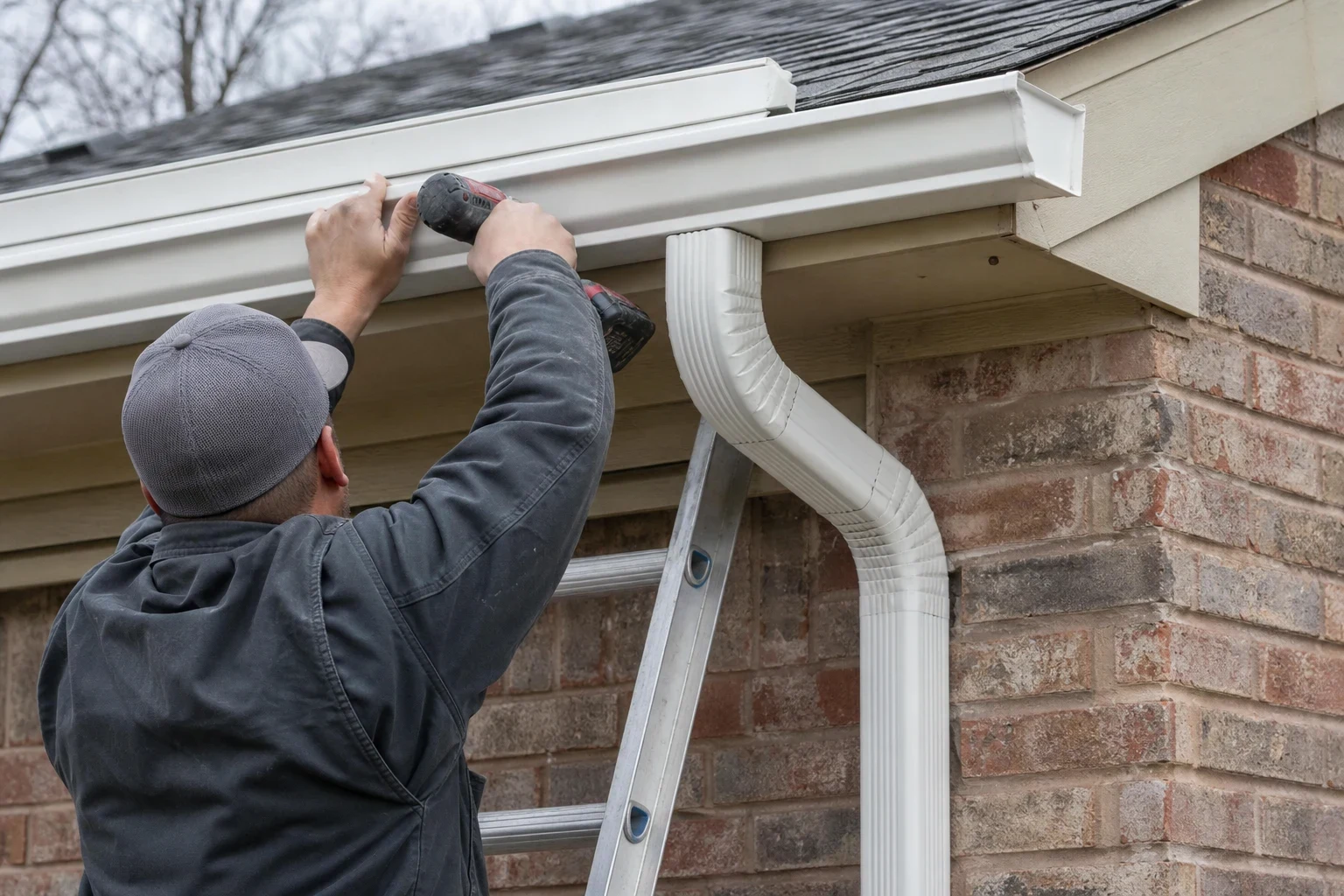
We install, repair and maintain gutters so rainwater leaves your roof and stays away from your fascia, siding and foundation. We start with upkeep: we fix and adjust what you have when it is sound, and replace runs only when the metal or the slope can no longer do the job.
What good gutters do for the rest of your home
A gutter system is a small part of your home that protects a lot of it. When it drains properly, water clears the shingle edge, the fascia board stays dry and the soil around your foundation is not soaked every time it rains. When it sags, clogs or leaks at the seams, the damage arrives slowly: rotted trim, stained siding, a damp crawlspace.
Central Oklahoma spring storms can drop a lot of rain in a short window, so sizing and slope matter as much as the metal itself. We look at how much roof drains to each downspout and whether the outlets can keep up.
Most of our gutter work is care for an existing system. That means rehanging a sagging run, resealing a corner or adding a downspout where one end always overflows. When full replacement is the better value, we explain why and show you photos of what we found.
What's part of our gutter work
- One-piece aluminum runs
- We cut new gutters to the full length of each wall, so joints only fall at corners and outlets. Fewer joints leave fewer spots for a slow drip to begin and stain the trim.
- Resealing and new hangers
- We scrape out old sealant at corners and end caps, reseal them and swap loose spikes for hidden hangers screwed into the fascia. That is often the easiest way to get more years from a system that is otherwise sound.
- Fixing the slope
- A gutter needs a slight fall toward each outlet. If water stands in the trough after rain, we re-pitch the run so it drains instead of rusting and drawing mosquitoes.
- Downspouts and extensions
- Downspouts are sized for the roof area feeding them, and we add extensions or splash blocks that send water several feet from the foundation.
- Checking drip edge and fascia
- Before hanging anything, we make sure the drip edge directs water into the gutter, not behind it. We point out soft or rotted fascia and talk it over with you, since new gutters should never go on wood that cannot hold them.
When your gutters need a look
Water pouring over the edge
If gutters overflow in a normal rain, the cause is usually a clog, a missing outlet or a gutter undersized for the roof above.
Sagging or leaning away
A run that dips between hangers or tilts out from the house has loose fasteners or worn fascia, and a storm can rip it loose if nothing is done.
Streaks and flaking paint
Dark lines on siding or peeling paint on trim mean water is getting out at the seams or running down behind the gutter.
Water around the foundation
Washed-away mulch, bare dirt or puddles beside the house after rain show the downspouts are emptying right where the water does the most damage.
Shingle grit in the gutters
Granules building up in the trough mean the roof itself is wearing. We point it out, and a roof inspection can tell you how many years the shingles have left.
How a gutter visit runs
- 1
Start with a phone call
Describe the overflow, sag or staining you have noticed, along with roughly how old the gutters are. From there we arrange a time to come out and look.
- 2
A look at the whole system
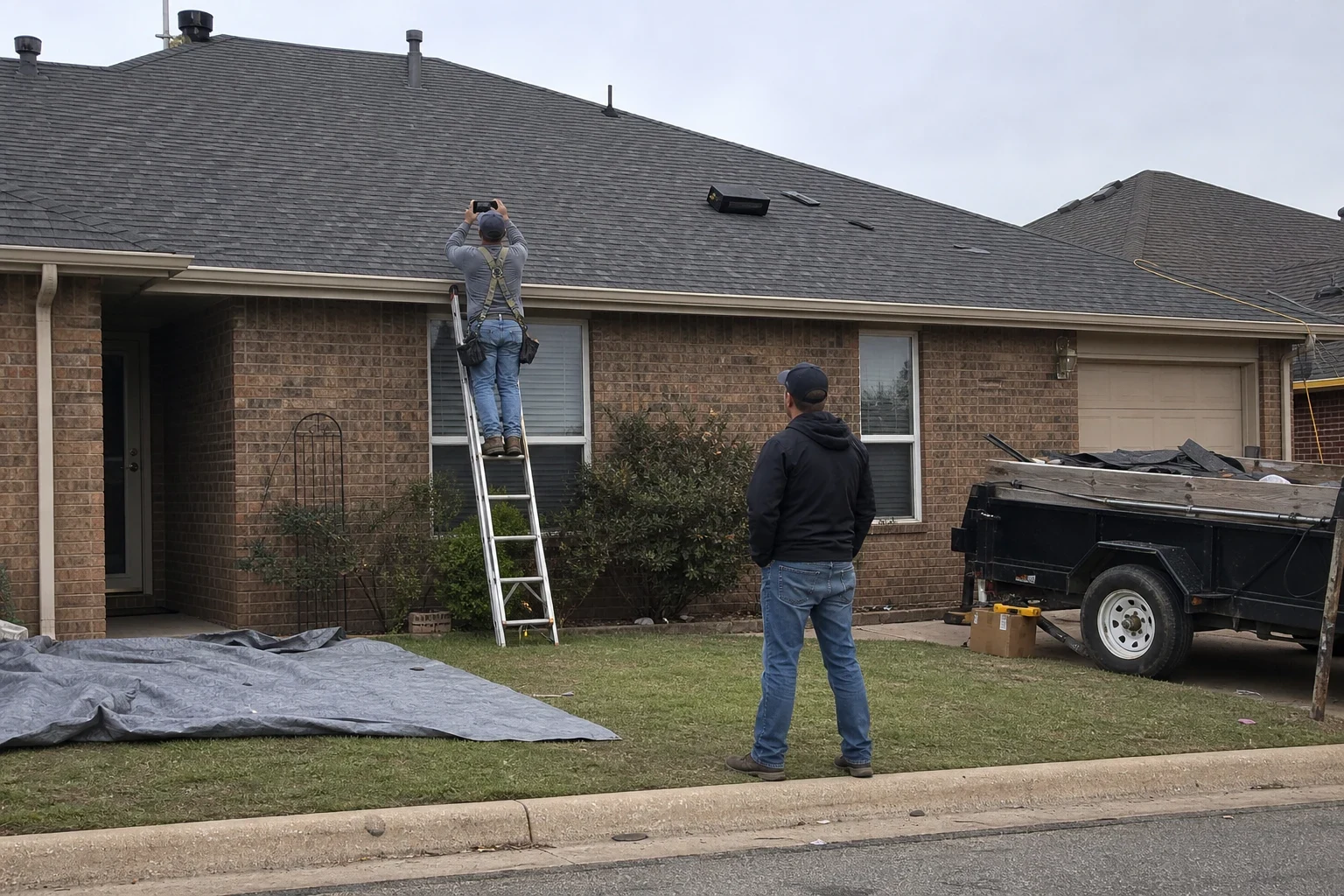
We walk the perimeter, check slope with a level, test hangers and look at the fascia and drip edge. You get photos of anything that matters.
- 3
Options in writing
Our estimate lists the repair route and, where it makes sense, the replacement route, each with its own line items. You choose with the facts in front of you.
- 4
Work day and water test
We protect beds and shrubs, remove old sections carefully and hang the new or adjusted runs. Before we leave, we run water through each gutter to confirm it drains to the outlet.
- 5
Cleanup and walk-through
Old metal, screws and debris are hauled away. We walk the finished work with you and point out what to watch over the coming seasons.
What sets the price of gutter work
The price depends on your home and the shape your current gutters are in. We quote after seeing the job and lay repair next to replacement, so you can pick what fits the years you expect to stay.
- Footage and height
- The total linear feet set the material and labor. Two-story walls and steep slopes under the eaves need more setup and care.
- Size and material
- Five-inch gutters work on many roofs, but larger or steeper roofs often call for six-inch troughs and wider downspouts to handle hard rain.
- State of the fascia
- Rotted boards must be replaced before new gutters are hung. We show you any soft wood we find, so the cost never catches you off guard.
- Corners, outlets and downspouts
- Every inside or outside corner and every extra downspout adds parts and labor, especially on houses with lots of rooflines.
- Gutter guards
- Guards add to the upfront price but can cut down on cleanings for homes under heavy tree cover.
Gutter questions we hear often
Something not covered here? (572) 213-2033
Can my old gutters be repaired, or do they need replacing?
Many can be repaired. If the metal is solid and the problem is loose hangers, failed seams or poor slope, a repair is usually the better value. Replacement makes sense when there is widespread rust, repeated splits or gutters too small for the roof.
Should I replace gutters when I replace my roof?
It is often a good time to. The drip edge and fascia are exposed during a roof replacement, so problems are easy to correct, and the new gutters go up on a sound edge. If your current gutters are in good shape, we can remove and rehang them instead.
How often should gutters be cleaned?
Twice a year suits most homes, once in late spring and again after the leaves drop in fall. Houses under large oaks or elms may need it more often. Regular cleaning is one of the cheapest ways to extend the life of both your gutters and your fascia.
Are gutter guards worth it?
They help most on homes with heavy tree cover, where gutters fill quickly. No guard is maintenance-free, since fine debris and shingle grit still settle on top. We will tell you plainly whether your roof and trees justify the added cost.
Will installing gutters damage my roof?
It should not. Hangers fasten into the fascia board, not through your shingles. We check that the drip edge sits correctly so water lands in the gutter, and if we see roof damage while we are up there, we photograph it and tell you.

Keep the water moving away from your home
A short phone conversation is enough to tell us what your gutters are doing and set up a visit. We will look at the whole system and give you clear options in writing.