ServicesRoof Inspections
Roof Inspections in Guthrie That Plan the Years Ahead
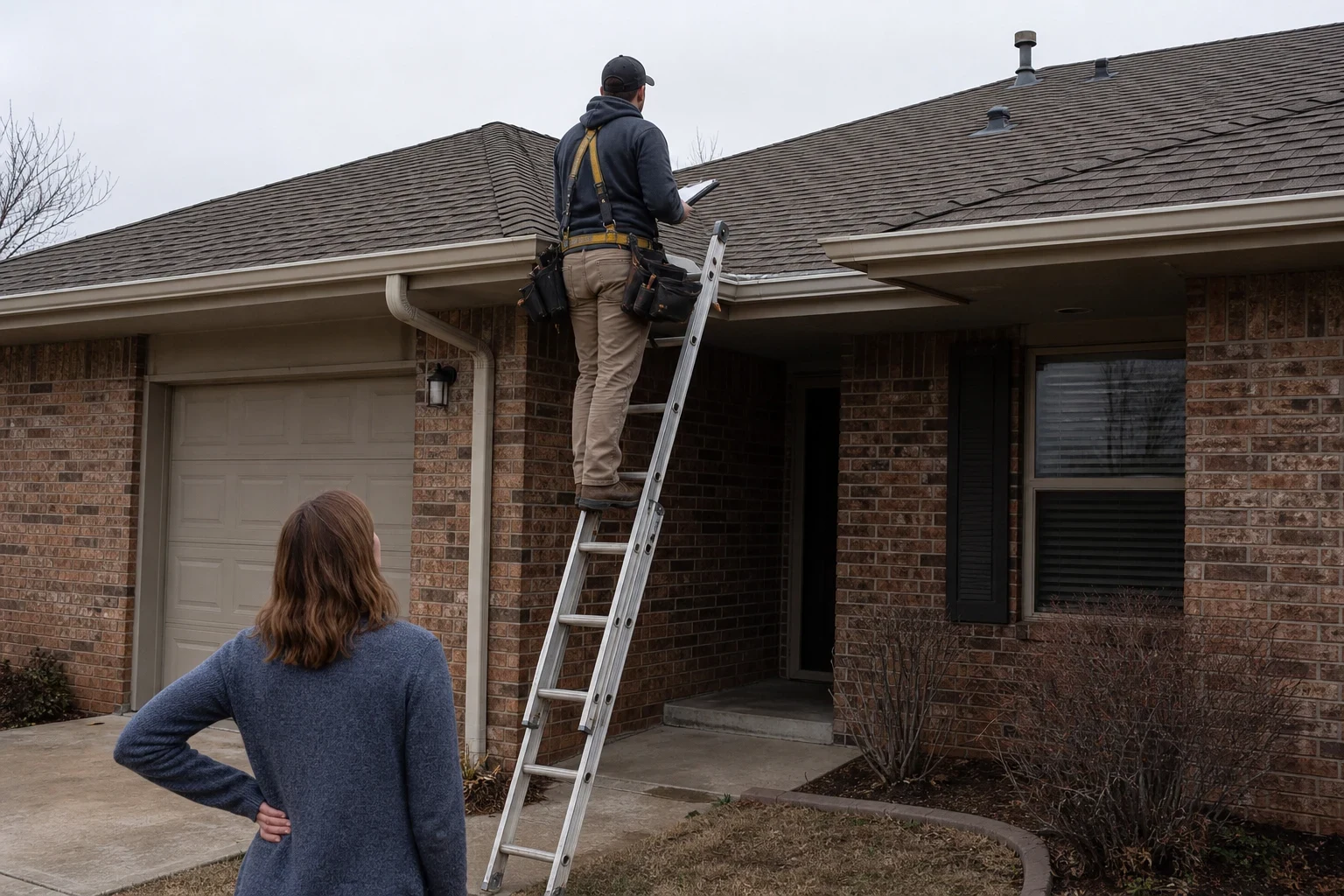
We walk your roof, check the attic and look closely at flashing, vents, sealant and shingles. You get a plain account of what is sound, what is wearing and what can wait, with photos, so small upkeep can keep the roof you already have working longer.
A Check-Up for the Roof You Already Have
Most roofs do not fail all at once. A pipe boot cracks, a run of sealant dries out, a few shingles lose their grip after a windy spring. Each one is small and inexpensive on its own. Left alone for a few seasons, they let water into the decking and insulation, and that is when a manageable roof turns into a costly one.
A roof inspection is how we catch those small things while they are still small. We look at the whole system, from the shingle surface to the flashing at every wall and chimney to the underside of the deck in your attic. Then we tell you what we found in plain terms and in order of priority.
The goal is not to sell you a roof. It is to help the one on your home last as long as it reasonably can, and to give you enough notice to budget when it eventually does need roof repair or roof replacement.
What We Look At
Shingle surface and granule wear
We check for bald spots, curling, cracking and lifted tabs. Granule loss tells us how much protective life the shingles have left against summer sun.
Flashing at walls, chimneys and valleys
Metal flashing is where most leaks start. We look for gaps, rust, loose fasteners and sealant that has pulled away from the brick or siding.
Pipe boots, vents and penetrations
Rubber boots around plumbing vents harden and split with age. We check each one, along with exhaust vents and any satellite or solar mounts.
Attic and decking from below
Inside the attic we look for water stains, soft or dark decking, daylight at the nail lines and signs of poor airflow that shorten a roof's life.
Gutters and drainage
We note sagging runs, clogged downspouts and water that spills behind the gutter onto the fascia. If they need attention, our gutters page covers that work.
Photos and a written summary
You get pictures of what we saw up top and a short list sorted into needs care now, watch for next year and fine for the moment.
Good Times to Have Your Roof Inspected
Your roof is past its midpoint
Once shingles are well into their expected life, a yearly look lets you plan instead of react.
After a spring of hail and wind
Oklahoma storm season can bruise shingles without leaving obvious marks from the ground. A look afterward tells you whether storm damage repair is worth discussing.
Granules collecting in the gutters
A handful is normal. Steady piles at the downspouts mean the shingle surface is wearing faster.
Faint stains on a ceiling or in the attic
A small brown ring often points to slow leaking at a vent or flashing, well before it shows as a drip.
Buying or selling a home
An independent read on the roof helps both sides understand what they are working with.
Old repairs nobody explained
If the roof has patches or mismatched shingles from before your time, we can tell you whether they are holding.
How an Inspection Visit Goes
- 1
A short conversation by phone
You tell us what prompted the visit, the rough age of the roof and anything you have noticed. We set a time that works for you.
- 2
The exterior and roof surface
We start with the eaves, gutters and siding at the roofline, then go up when the pitch and weather allow it safely. We walk carefully and stay off fragile areas.
- 3
The attic
If there is attic access, we take a look from below with a light. This is often where we confirm or rule out what we suspected from above.
- 4
Walking you through it
Before we leave, we show you the photos and explain what each finding means. You can ask anything.
- 5
An upkeep plan in writing
You get the summary with priorities. If something needs work, we explain the options and price them separately, so you can decide without pressure.
What Shapes the Cost of an Inspection
An inspection on a simple single-story roof takes less time than one on a steep, cut-up roof with several chimneys. We tell you the price by phone before we come out, and nothing gets added on the day without your say.
- Roof footprint and slope
- A bigger roof is simply more surface to cover. A steep slope means slower, more careful footing and sometimes added safety gear.
- Roof complexity
- Dormers, valleys, skylights and multiple levels add more flashing to check, and more places for water to find a way in.
- Attic access
- A clear hatch is quick. Tight or blocked attics take more time to look through properly.
- The purpose of the report
- A routine check-up is simpler than a detailed record for a home sale or a storm insurance claim, which needs more photos and notes.
Questions About Roof Inspections
Something not covered here? (572) 213-2033
How often does my roof need an inspection?
A yearly check suits most homes, best timed after the spring storms are over. A newer roof can stretch a bit longer between visits. An older roof, or one that has been hit by hail, does well with a look every year.
How much time does an inspection take?
Usually around an hour, give or take, based on roof size and whether we check the attic. Bigger or more complicated roofs need more time. We will give you an idea of how long when you call.
Do I need to be home for the inspection?
It helps. When you are there, we can reach the attic and review the photos with you before we leave. If you cannot make it, we can still look over the roof surface and gutters from outside and go over the results with you by phone later that day or the next.
Are you going to say I need a new roof no matter what?
No. Most inspection findings are upkeep items like resealing flashing, swapping a pipe boot or fastening loose shingles. If a roof truly is close to the end, we tell you directly and explain our reasons, and the decision stays yours.
Is an inspection useful for an insurance claim?
It gives you a clear record of the roof's condition, with photos, before you reach out to your insurer. We are happy to explain the typical steps of a claim. Coverage is decided by your insurance company, not by us.
If you find a problem, am I required to hire you?
No. We point out the problem, tell you how urgent it is and price the repair as a separate item. You can take that information to anyone, and plenty of small items can wait until it suits you.
Give Your Roof a Proper Look
A careful inspection now can add years before your next big roof decision. Tell us about your roof and we will find a time to come out. We also work across Edmond, Stillwater and nearby towns.