ServicesRoof Replacement
Roof Replacement in Guthrie Built for the Years After Install Day
When repairs stop paying off, we replace the whole system: decking checked, underlayment and flashing done properly, attic ventilation balanced. The goal is a roof that needs only light, regular care to keep doing its job on your home for a long time.
When a New Roof Is the Right Call
Most roofs can be repaired for years. We start there, and we tell you plainly when that stops being true. Replacement makes sense when the shingles have lost most of their granules, when leaks keep appearing in new places, or when the decking underneath has started to soften.
A replacement is also a chance to fix what shortened the old roof's life. Poor attic airflow bakes shingles from below. Thin or missing drip edge lets water wick into fascia. Oklahoma's swings from summer heat to winter freeze punish every shortcut, so we build the new system to handle that movement and to be simple to inspect and maintain.
What a Full Replacement Covers
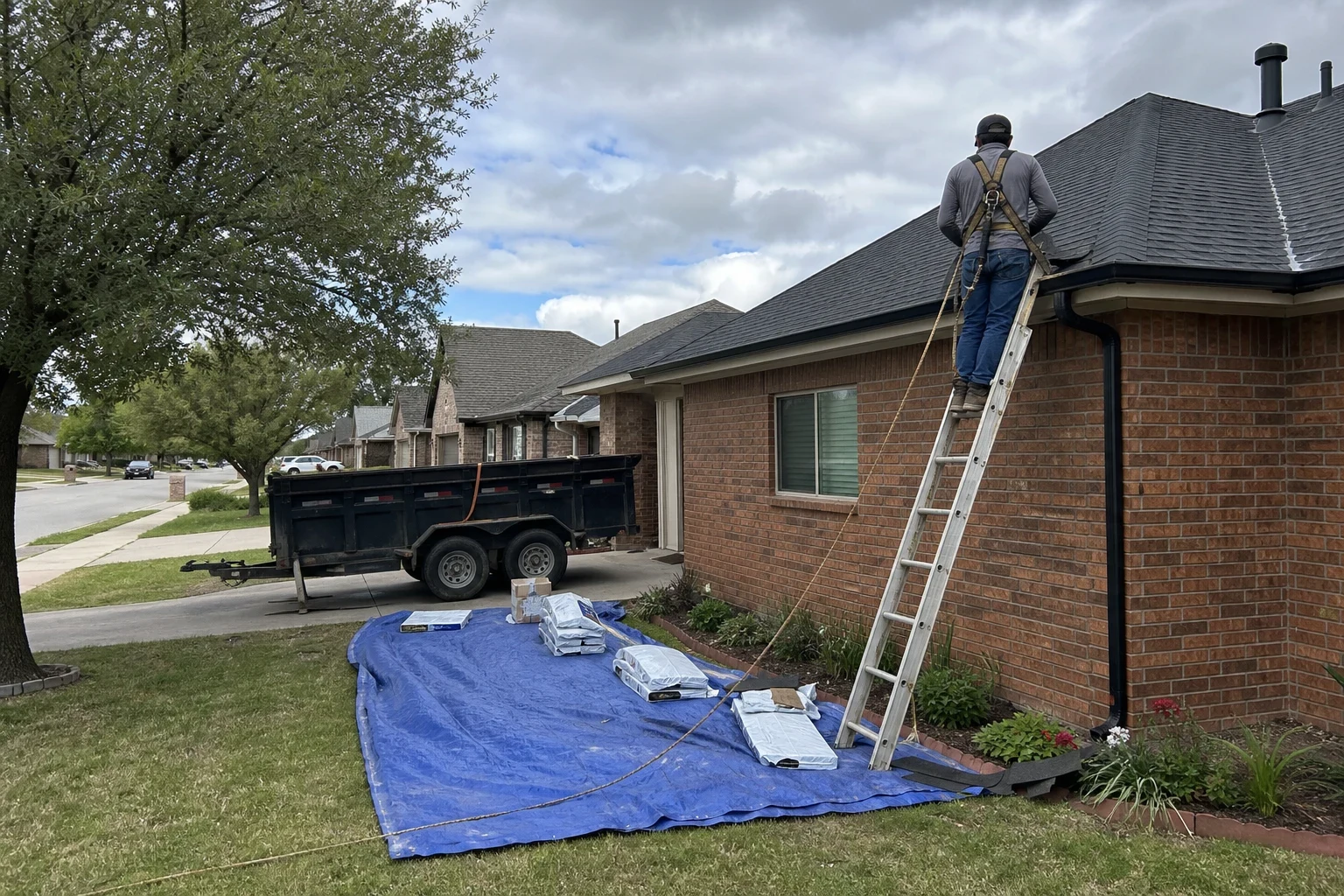
- Tear-off down to the sheathing
- We remove every old layer so the wood is fully exposed. Shingling over an old roof hides problems and puts extra weight on framing that was never built for it.
- Decking checked and replaced as needed
- Any board that is soft, separating or rotted gets cut out and swapped for new sheathing. You see photos of those spots before new materials are installed.
- Underlayment, drip edge and ice barrier
- The deck is wrapped in synthetic underlayment, and self-sealing ice and water membrane goes in the valleys, along the eaves and around every penetration. Fresh metal drip edge directs runoff away from the fascia.
- Fresh flashing at walls and chimneys
- We install new step flashing, counterflashing and pipe boots instead of reusing the old pieces, since worn flashing causes most leaks on a newly installed roof.
- Ventilation in balance
- Soffit intake is sized to match ridge exhaust. Steady airflow keeps shingles cooler in summer, cuts down on winter condensation and lengthens the life of the roof.
- Cleanup with a magnet sweep
- Tarps cover plantings and siding while the old roof comes off. When we finish, debris is hauled away and the yard and driveway are swept for nails.
Signs Your Roof May Be Ready for Replacement
Granules in the gutters
A steady layer of grit in the gutters or at downspout outlets means the shingles are losing their protective surface. Bare asphalt ages quickly in strong sun.
Curling, cupping or cracked shingles
Edges that lift or crack across the roof, not in one spot, point to a roof near the end of its life.
Repeated leaks in different places
One leak is a repair. New ones every season usually mean the whole system is wearing out.
A spongy feel or sagging lines
Soft spots underfoot or a ridge that dips suggest the decking has taken on water. That calls for a closer look soon.
Daylight or stains in the attic
Light through the boards or dark rings on the sheathing tell you water and air are getting through.
The Steps From First Visit to Finished Roof
- 1
A look at the roof and a straight answer
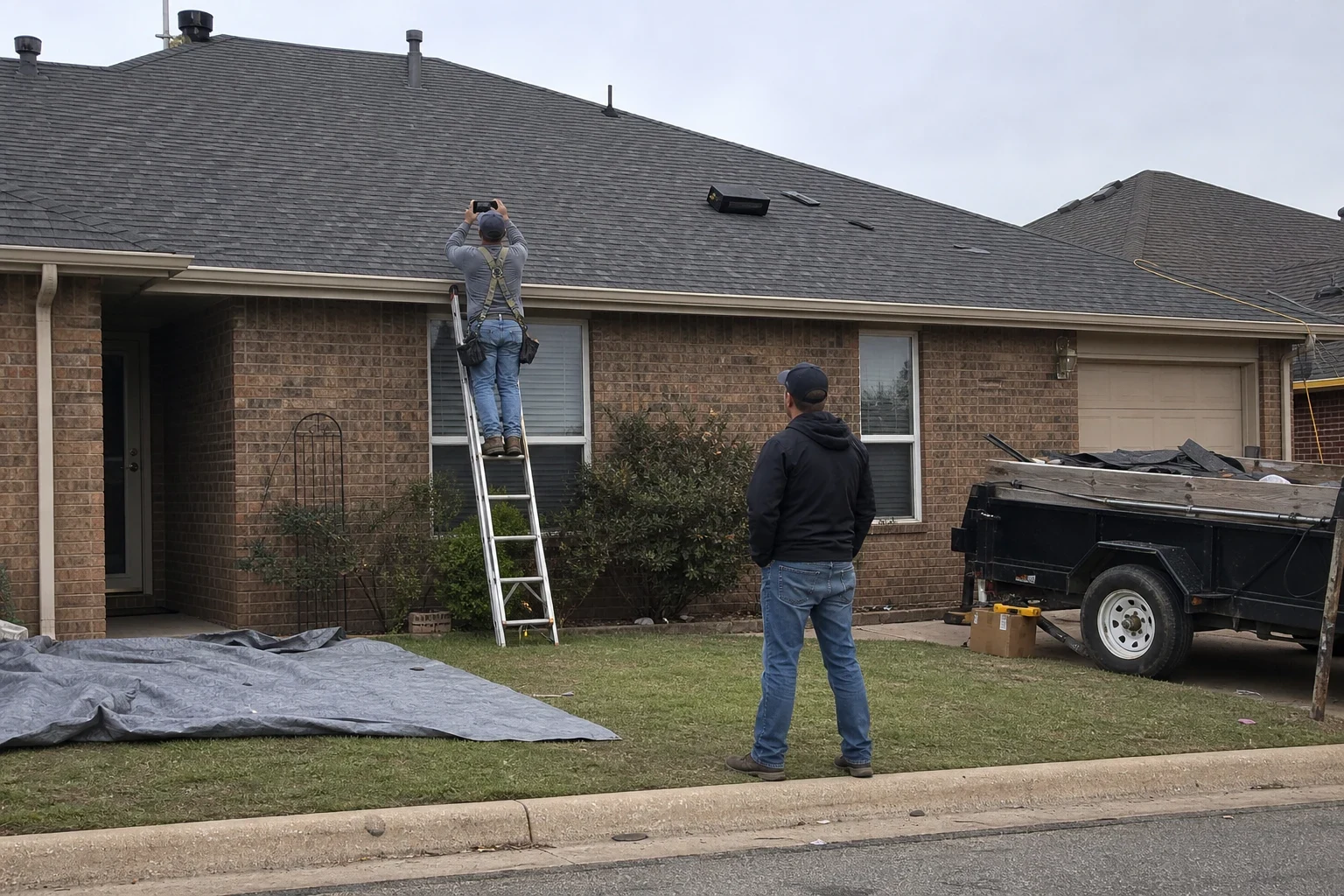
We go over the roof surface and the attic, take pictures of what we see and tell you if a repair could still do the job. If a new roof is the smarter move, we lay out the reasons.
- 2
Scope and materials on paper
Your estimate breaks out tear-off, the decking allowance, underlayment, flashing, ventilation and the shingle you pick. Colors and materials are settled together before we place any order.
- 3
Permit and start date
Where the city calls for a permit, we pull it, and we pick a start date with the forecast in mind. Materials are delivered a short time before the crew shows up.
- 4
The install
We tear off and dry in on the same day, so your house is not left exposed overnight. Depending on size and pitch, most homes wrap up in one to three days.
- 5
Walk-through and upkeep tips
Together we look over the new roof, go through photos of the work and cover the light upkeep that keeps it in good condition.
What Goes Into a Replacement Estimate
We measure the roof and inspect its condition closely before giving any price. Tear-off, decking, underlayment, flashing and shingles each appear as separate lines on the estimate. Because the decking stays hidden until the old roof comes off, we explain how that allowance works before work day.
- How big and steep the roof is
- More square footage means more material and labor. Steeper pitches need extra safety setup and a slower pace.
- Layers being removed
- Every additional layer of old shingles adds tear-off time and more weight to cart away.
- Decking condition
- Bad sheathing is replaced and charged per sheet, and how many sheets is only clear after the old roof is off.
- Material you choose
- Architectural shingles, impact-rated shingles and metal differ in price and in how well they handle hail and wind.
- Chimneys, valleys and more
- Each chimney, skylight, valley and dormer brings extra flashing and adds time.
Common Questions About a New Roof
Something not covered here? (572) 213-2033
Can new shingles go right over the old ones?
We advise against it. Laying over an old roof covers up soft decking and tired flashing, holds in heat and adds weight. Tearing everything off lets us correct what is below so the new roof holds up.
How many days does a replacement take?
One to three days for most homes. The weather, the size of the roof and how much decking needs work set the schedule, and every section we open is dried in before the day ends.
Will my homeowners insurance pay for a new roof?
That comes down to what caused the wear. Hail and wind damage is often covered in part or in full, while age and normal weathering usually are not. We take photos of what we find and explain the claim steps, but the adjuster decides on coverage. Our storm damage repair page goes into that process further.
Should I plan to be home while you work?
Usually not. We do ask you to move cars out of the driveway and take down fragile items hanging on interior walls, because the hammering can knock them loose.
What keeps a new roof in good condition?
Clear the gutters, keep branches trimmed away from the roof and have it checked after a big hailstorm. Regular visits through our roof inspections service catch small things, like a lifted shingle or a cracked boot, before they turn into leaks.
Talk Through a New Roof Before You Decide
Tell us what you are seeing and we will arrange a visit, look at the roof and attic, and give you a clear answer on repair versus replacement.