ServicesStorm Damage Repair
Storm Damage Repair in Guthrie That Protects the Roof You Have
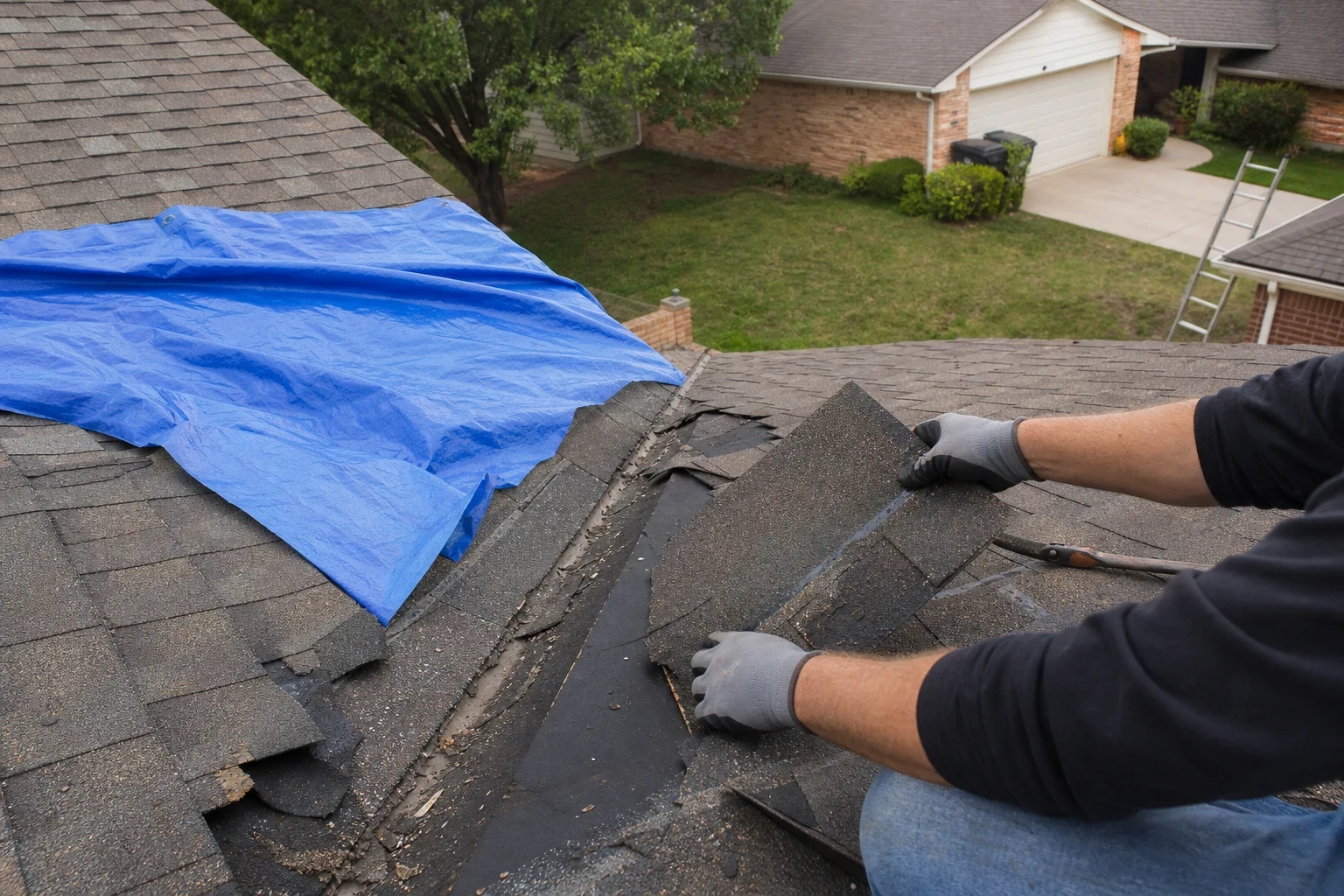
When hail or wind has been across your roof, we look closely, photograph what changed and repair it with materials that match. The aim is simple: undo the storm's damage so the rest of your roof can keep serving out its full life.
Repair the Storm Damage, Keep the Good Roof
A storm rarely ruins a whole roof. More often it bruises a slope, lifts a row of shingles along an edge, bends a vent cap or knocks a gutter loose. Left alone, those small injuries let water reach the decking, and that is where a roof with years left in it starts to fail early.
Our job is to find what the storm actually did, fix it properly and tell you plainly how much life the rest of the roof still has. Oklahoma spring hail and summer straight-line winds can hit hard, so we look at your roof slope by slope rather than assuming the worst or the best.
Sometimes the damage is widespread enough that a full roof replacement is the honest answer. When that is the case, we show you why with photos, and we explain it before anything is priced.
What Our Storm Repair Work Covers
Hail impact assessment
We check shingles for bruises, cracked mats and granule loss that exposes the asphalt underneath. Soft metals like vent caps and flashing often show dents first, and they help us read how hard a slope was hit.
Wind-lifted and missing shingles
Shingles that lifted but did not tear off have usually lost their seal strip. We reseat or replace them and fasten to the pattern the manufacturer calls for, so the next gust does not peel them again.
Flashing, vents and pipe boots
Storms bend metal and split rubber. We replace damaged pipe boots, straighten or swap flashing and reseal around chimneys and skylights, the places where most storm leaks actually start.
Decking checks where water got in
If shingles were missing long enough for rain to reach the wood, we probe the decking for softness. Spongy sections get cut out and replaced before new shingles go down over them.
Gutters and downspouts
Hail dents gutters and wind can pull them from the fascia. We rehang, repair or replace runs as needed, and our gutters page covers that work in more detail.
Photo documentation
You get clear photos of each damaged area, taken before and after the repair. They are useful for your records and for any insurance claim you choose to file.
Signs a Storm Has Left Damage Behind
Granules collecting under downspouts
Once the hail has passed, glance at the splash block beneath each downspout. A layer of dark, sandy particles there tells you shingles have shed part of their protective coating, and those bare patches age much faster in summer sun.
Shingles in the yard
Even one shingle on the lawn means a gap on the roof. Water can reach the underlayment the next time it rains.
Dented vents, gutters or downspouts
If the soft metal on your house is dented, the shingles took the same hits. Those dents are often the easiest storm damage to spot from the ground.
New stains on a ceiling
A fresh brown ring or a damp spot near an exterior wall after a storm usually points to lifted flashing or a torn shingle above it.
Creased or flapping tabs
A shingle that has been folded back by wind shows a horizontal crease line. It may look settled, but it has lost its seal and will keep lifting.
How a Storm Repair Visit Goes
- 1
Start with a phone call
Let us know the date the weather rolled through and anything you spotted from the yard or inside. From there we agree on a visit so we can see the roof ourselves.
- 2
A careful look on the roof
We walk each slope, check the attic where we can and photograph everything we find. You see the photos and hear our read before we talk about price.
- 3
A written scope
We lay out what needs repair, what is still sound and what the work will cost, line by line. If you plan to file a claim, we explain how our findings line up with what an adjuster will look at, though the adjuster makes the coverage decision.
- 4
Repair day
We protect landscaping and the driveway, remove damaged materials and install matched replacements. At the end of the day we sweep for nails and haul away debris.
- 5
After-photos and a walkthrough
We show you the finished repair, in person and in photos, and point out anything on the roof worth keeping an eye on in the seasons ahead.
What Moves the Price of Storm Repair
Hail and wind leave a different pattern on every roof, so the price follows the damage on yours. We put the scope in writing once we have seen it up close, which means the figure reflects your roof rather than a guess from the driveway.
- How much of the roof was hit
- A few lifted shingles on one edge is a short job. Hail spread across several slopes takes more material and more hours.
- Matching the existing shingles
- Older or discontinued shingles can take longer to match in color and profile. Getting a close match keeps the repair from standing out and helps it age with the rest of the roof.
- Condition of the decking
- If water reached the wood and softened it, those sections have to be replaced. We cannot know that until we look, which is why we check before pricing.
- Pitch and access
- Steep slopes and tight spots near trees or second stories need extra safety setup and slower work.
- Related components
- Flashing, vents, skylight seals and gutters all add to the scope when they took damage along with the shingles.
Common Questions After a Storm
Something not covered here? (572) 213-2033
Do I call my insurer first or have you inspect the roof first?
A lot of homeowners like having us look first. Our photos and notes record what the storm changed, which gives you more to go on when you talk with your insurer. Filing and coverage are decisions for you and your insurance company, and we are not your adjuster.
If hail hit my roof, do I need to replace it?
Not necessarily. Light or scattered hits often need only targeted repairs, and the rest of the roof can keep working for years. If most slopes took heavy damage, we will say so and show you the evidence. Our roof replacement page covers that work.
Will the new shingles blend in with my roof?
We aim to match the brand, color and profile as closely as possible. Fresh shingles can look a little sharper at first and then weather to match. If no close match exists, we go over the choices with you before work begins.
How quickly should the roof be checked after a storm?
Aim for within a few weeks, before more rain finds any openings. If nothing looks wrong from the ground, a roof inspection is a better next step than waiting for a leak to show.
Should I tarp the roof myself until you arrive?
Please stay off the roof. If water is getting in, set out buckets, move your belongings out of the way and tell us about it when you call so we can plan for it.
Find Out What the Weather Did to Your Roof
Let us know what you saw once the storm moved on, and we will schedule a close look at your roof. Before any repair starts, you get photos, a clear explanation and the scope in writing.